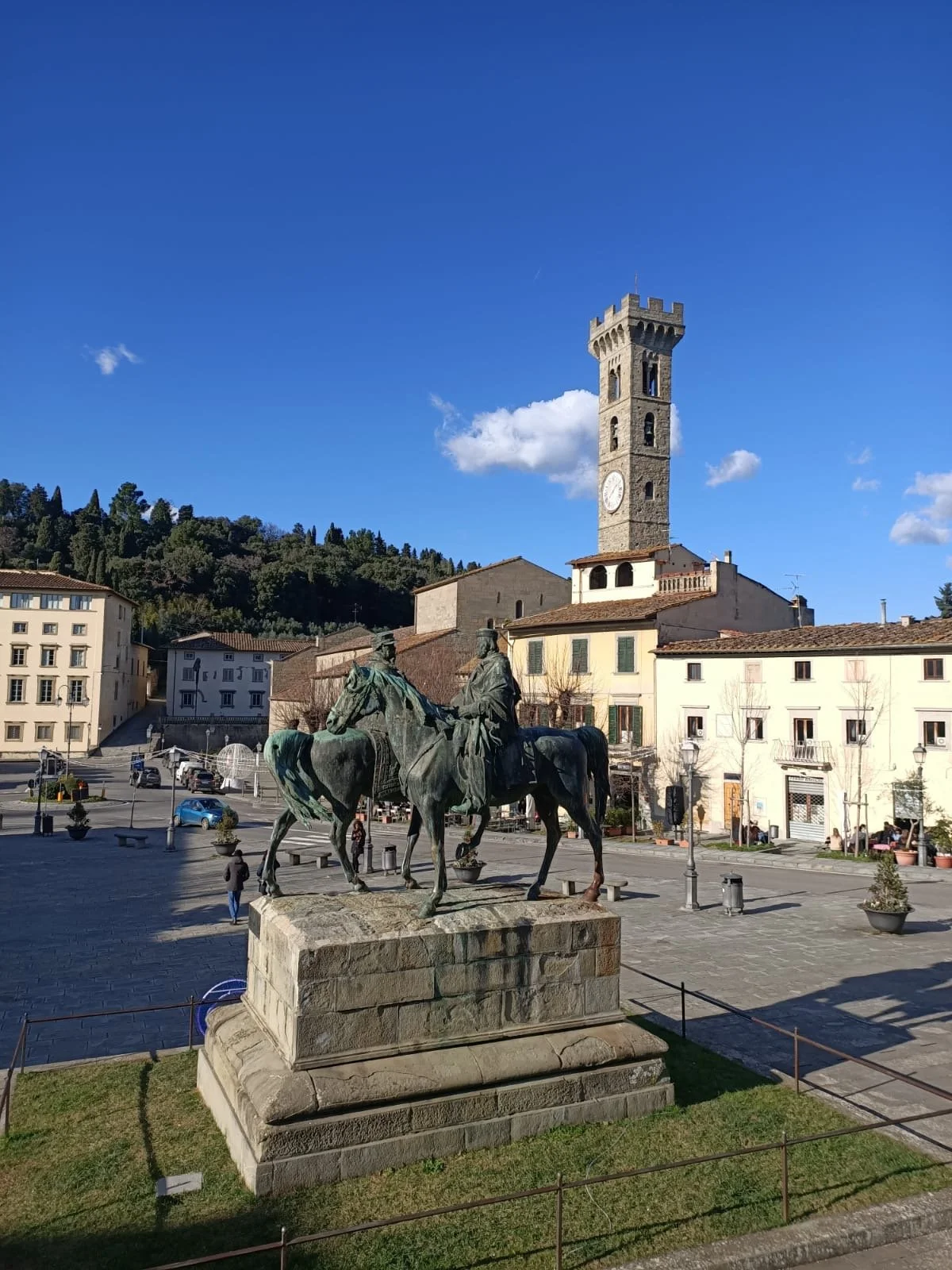
Fiesole - Etruscan origin, from the Latin “Faesulae”
Fiesole is a small historic hill town just above Florence, overlooking the Arno Valley. One of Tuscany’s oldest settlements, it traces its roots to the Etruscans and later Roman times.
On a golden Sunday, we left the hum of Florence behind and drove into the embrace of the hills of Fiesole, that elegant little jewel perched high above the Arno Valley. The sun was smiling, the cypresses swayed gently, and we were ready for a dose of sunshine, serenity, and a side of history, on a quiet Sunday in January.
Fiesole isn’t just any hilltop town. It’s ancient, we’re talking Etruscans, Bronze Age, Iron Age, Hellenistic charm. It’s the kind of place where you walk on stones older than most countries and casually bump into a Roman theatre (yes, the Teatro Romano, still basking in the Tuscan light like it’s 100 BC). The layers of history here aren’t hidden, they’re part of the furniture.
“Anyone seeking refuge on this hilltop from the bustle of Florence will find rest and gratification for the eyes and spirit...”
— Hermann Hesse
There are Sundays that slip away unnoticed, and then there are Sundays that seem to stretch time, where every moment glows gently, like sun on ancient stone. Ours began with a quiet ascent, away from the busy breath of Florence, toward the soft-spoken hills of Fiesole.
Fiesole isn't just perched above the city; it watches over it like an old poet with secrets in his pocket. The town spills across two noble hills, draped in orchards, whispers of Etruscan voices, and sunlit country houses.
We came seeking a simple Sunday: warmth of the sun on our faces, lunch in the sun, a visit to a quiet church.
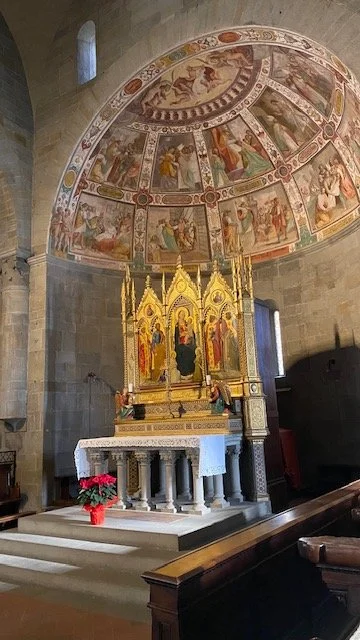
The church from 1028 The Cathedral of San Romolo (La Cattedrale Di San Romolo in Fiesole) welcomed us with stillness, a kind that echoes. This imposing Cathedral is also the perfect expression of amazing art and faith of past centuries and religious life of present. The interior of the church, with a three-nave layout, is Romanesque in style. The cathedral’s current appearance is due to a major restoration between 1878 and 1883 by architect Michelangelo Maiorfi.
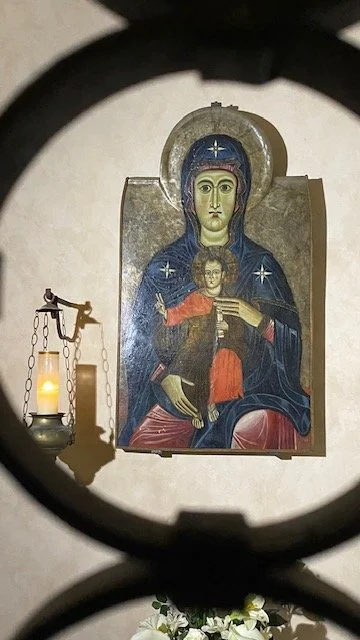
From there, we wandered into the old town, where even the shadows have a sense of history. We followed stone paths worn by centuries, until we found the Roman Theatre, Teatro Romano, sleeping in the open air, as it has for two thousand years.
No wonder Hermann Hesse returned here often. In his words:
"Fiesole offers a host of fascinating attractions, a heritage of different historic ages. But the most beautiful thing about it is its enchanting position..."
And truly, it’s not just what Fiesole holds, it’s how it rests on the hills, unhurried, arms outstretched toward the Tuscan light.
We lunched where the sun kissed our cheeks, and the view stretched out like a living painting: Florence below, domes and towers like notes in a Renaissance melody.
Fiesole doesn’t try to impress. It doesn’t need to. It invites. It pauses. It lets you feel the weight of history, the grace of silence, the joy of sunlight on stone.
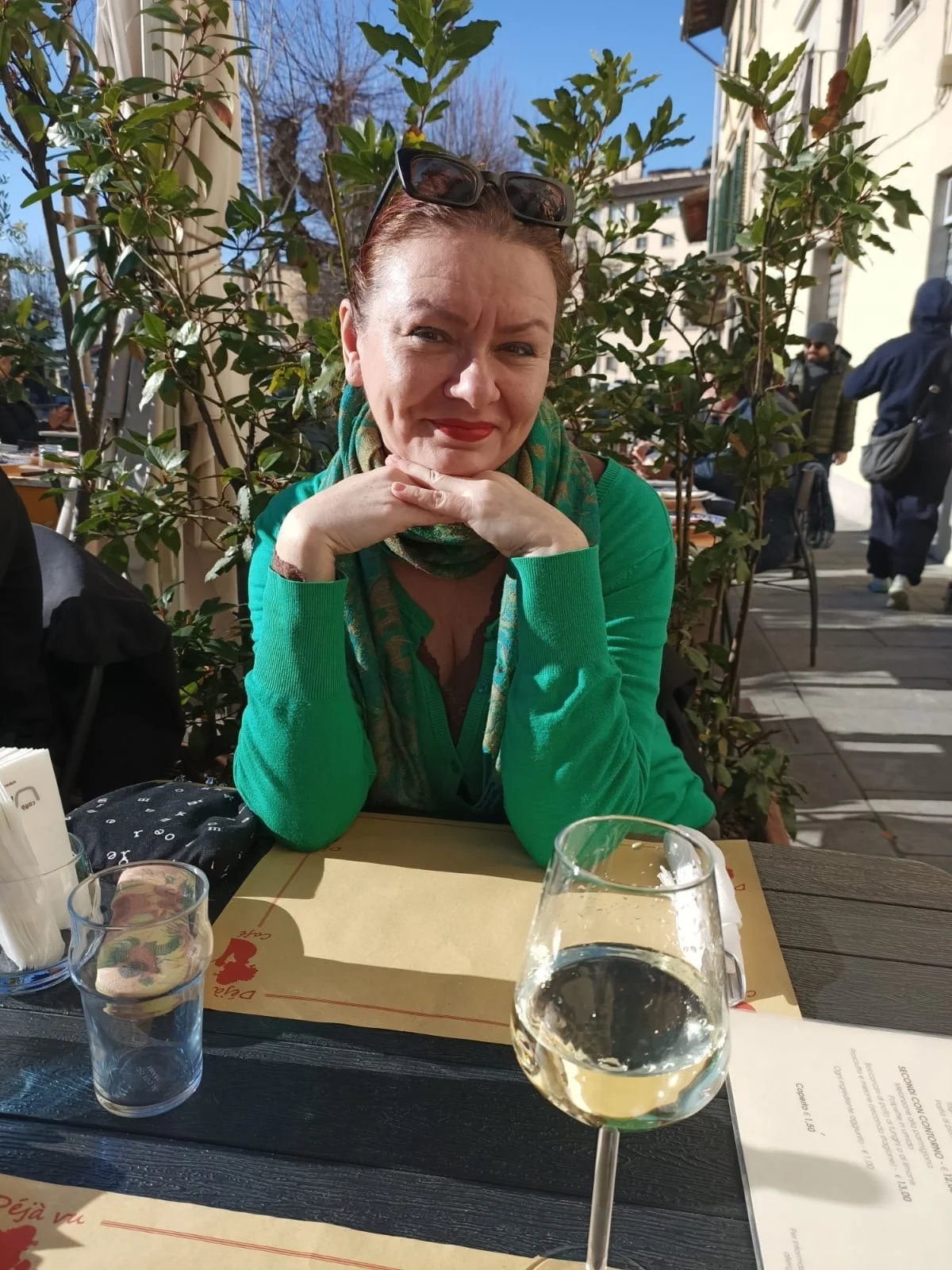
Enjoying a simple Italian lunch in January outdoors, such a luxury.
